NEWS & EVENTS
Recent News
PUBLICATIONS
2/24/2026
New article published in Frontiers in Human Neuroscience on the neural mechanisms linking prosocial behavior to well-being
2/2/2026
Woojin Jung and Prof. Sunhae Sul publish new paper in Addictive Behaviors on social norms and smoking craving
LAB NEWS
3/1/2026
Our lab has moved to the Department of Data Science at Hanyang University, Seoul
2/20/2026
Congratulations to Sunghwan (M.A.), and Donggun and Hyewon (B.A.) on their degrees!
11/30/2025
Sunghwan wins the Top Award at the KSPPA Winter Conference!
8/23/2025
Lab members participated in the 2025 Korean Psychological Association Conference, with presentations by Yuri, Taein, and Junho
1/23/2024
Our research on hedonic editing and happiness featured in Psychology Today.
TALKS | CONFERENCES
1/29/2026
Our lab participated in the 2026 KSBNS Workshop, where Sunghwan presented his research.
MEDIA
12/19/2025
Study on happiness and spontaneous thoughts about friends vs. money featured in Science Magazine.
https://scienmag.com/happier-people-think-more-about-friends-not-money/
11/30/2025
Lab members - Sunghwan, Woojin, Taein - presented their research at the KSPPA Winter Conference.
11/20/2025
Prof. Sunhae Sul featured in CHANNEL PNU’s Talkpedia, sharing insights on youth anxiety and navigating uncertainty.
11/20/2025
New paper in Communications Psychology shows that happier individuals prioritize relationships over money
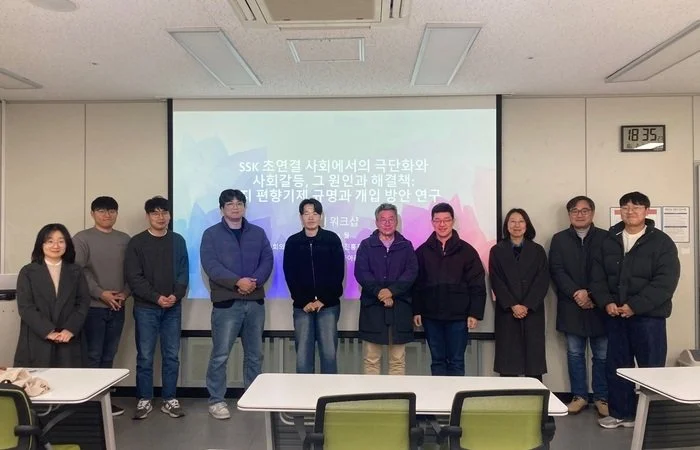
On February 3rd, 2025, we held a workshop with researchers from PNU and UNIST, with whom we collaborating on the government-funded Social Science Korea (SSK) project, titled “Delineating the Mechanisms of Cognitive Bases Underlying the Exaggeration of Polarization and Social Conflicts in a Hyper-Connected Society.”
In the workshop, we shared our analyses on how political polarization influences cognitive processing, resource allocation, and social learning. Moreover, We discussed how cognitive differences resulting from political polarization can be explained by the structural characteristics of the brain.
Based on these discussions, we plan to strengthen our collaboration and expand our academic contributions through journal publications and conference presentations.
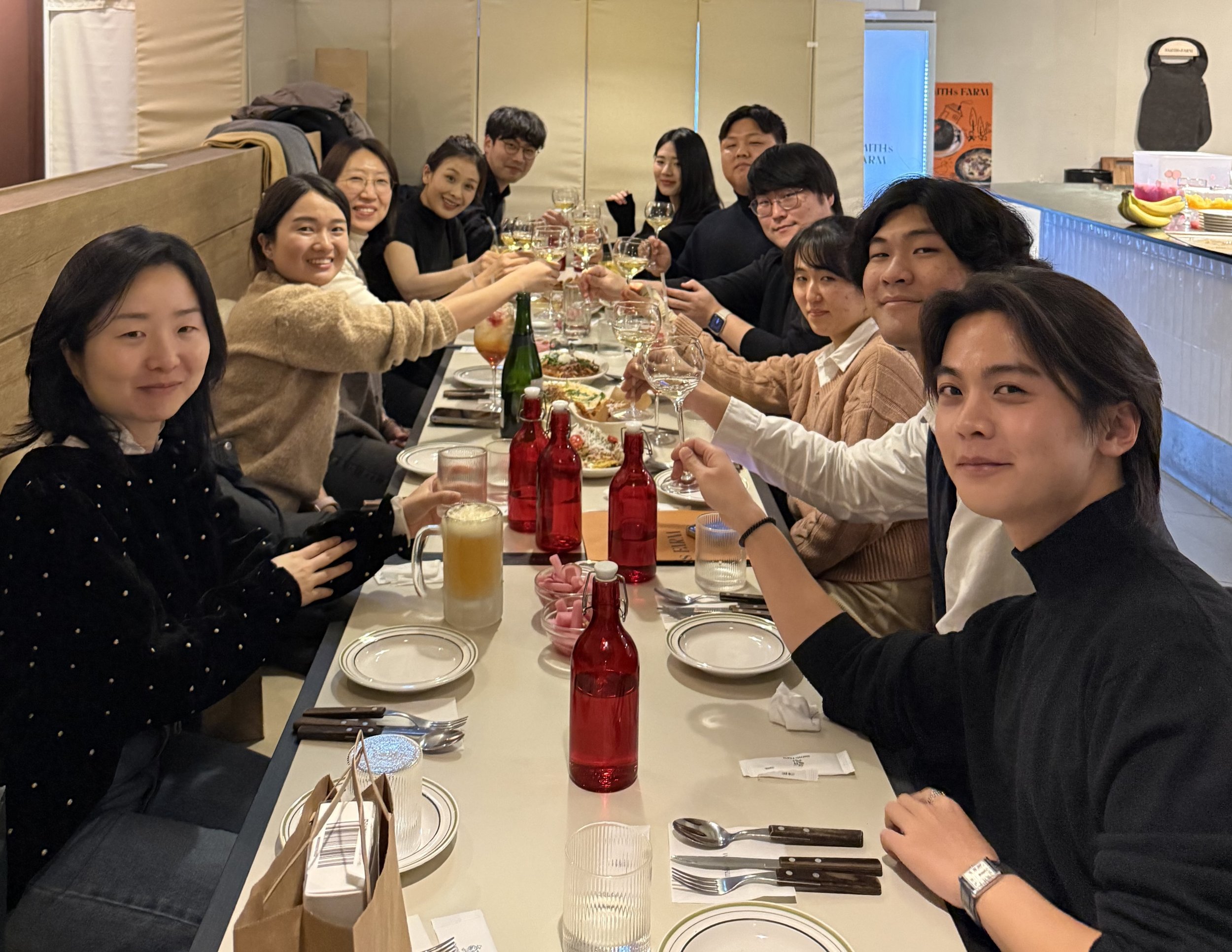
December 23rd
Our lab held its annual year-end dinner, reflecting on 2024 and celebrating our achievements. It was inspiring to see many of last year’s resolutions fulfilled.
We shared fun and memorable stories with Professor Sul.
We sincerely hope that, just like in 2024, all our members remain healthy and achieve their goals in 2025.
Prof. Sul and Won-Gyo published a new paper in Social Cognitive and Affective Neuroscience !!
"Striatal-hippocampal functional connectivity contributes to real-life positive anticipatory experiences and subjective well-being"
Prof. Sul and Seungmin (A graduate of our lab's master's program) published a new paper in Scientific Reports !!
"Motivational and behavioral mechanisms underlying generalized health risking behaviors during the COVID-19 pandemic in smokers"
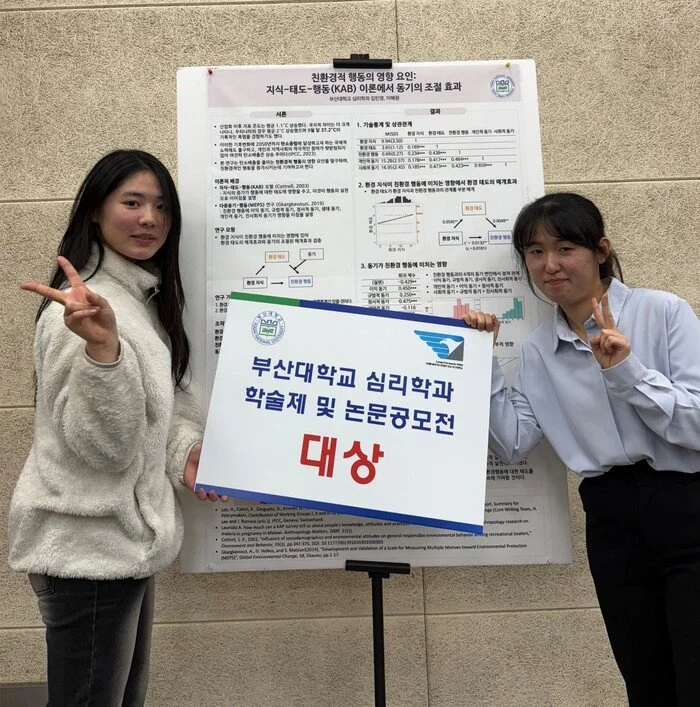
Our lab RAs, Minyeong and Hyewon, presented their research poster in the academic conference for undergraduate students hosted by the Department of Psychology at Pusan National University (November 29th, 2024).
They won the first place and we are proud of them!
Poster title: “What promotes pro-environmental behavior? Integrating the role of personal and social motivations.